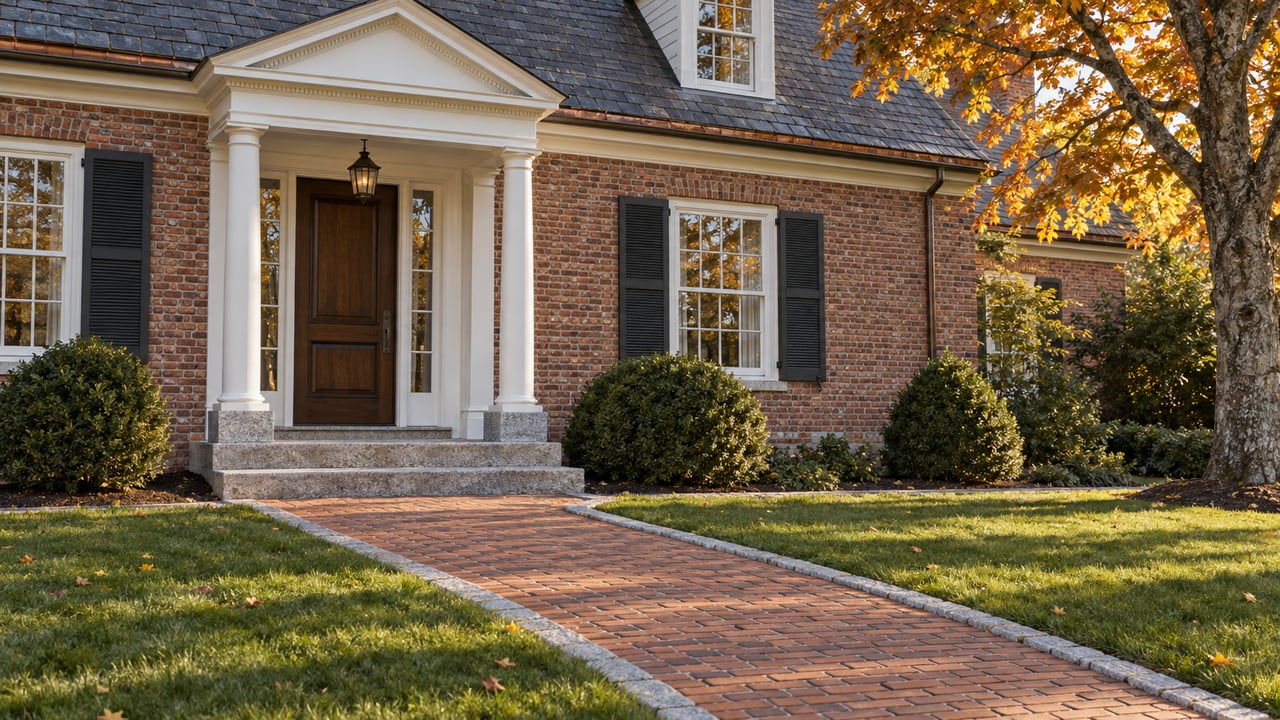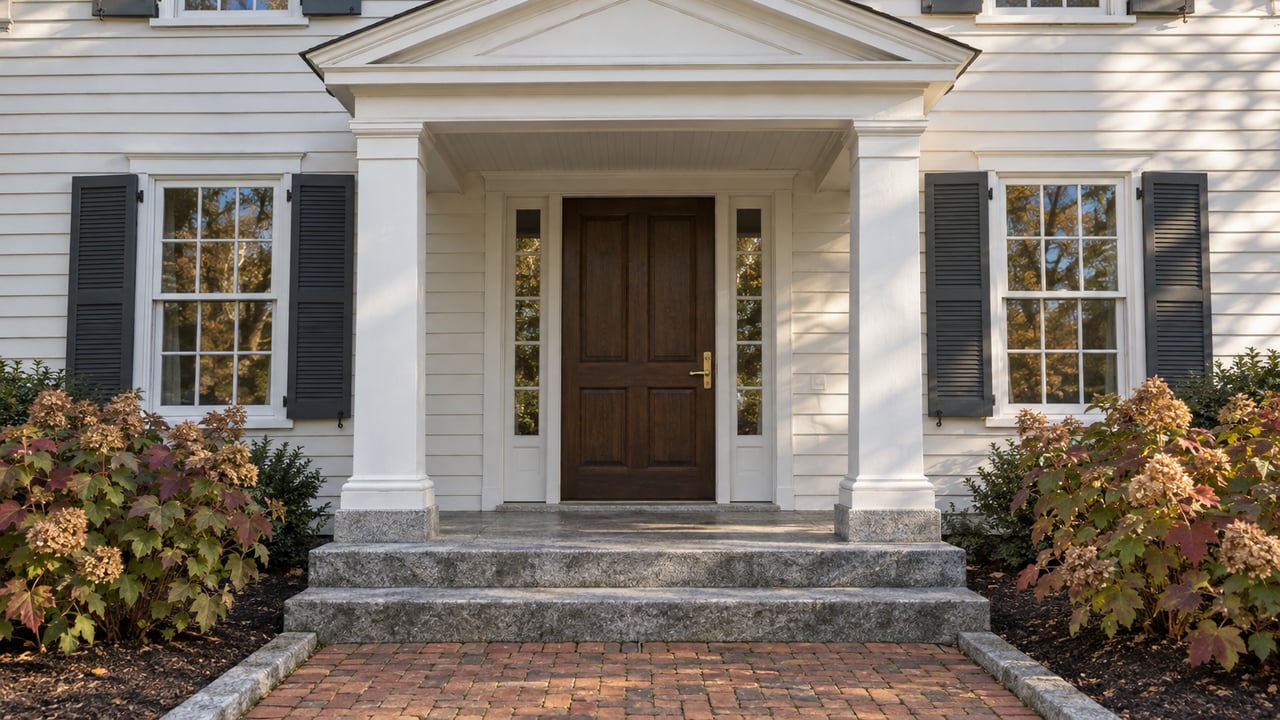
Walk from the Chestnut Hill Reservoir up toward Hammond Pond Parkway and nothing changes underfoot. The stone walls keep the same rhythm. The maples arch the same way over the road. Somewhere along that walk, without a sign or a shift in the pavement, you cross out of the city of Newton and into the town of Brookline. On a map, that crossing is a thin gray line. On a closing statement, it is the difference between two tax bills, two school assignments, and, as of this year, two entirely different development futures.
Real estate listings sell Chestnut Hill as a single, tidy neighborhood name. It behaves more like two adjacent markets that happen to share a reservoir, a shopping corridor, and a zip code. Anyone comparing a Chestnut Hill address to another western suburb needs to know which side of that line a given property sits on before the price, the taxes, or the school assignment make sense.
The border is older than either town's current zoning code
Chestnut Hill's historic core is formally split down the middle. The Chestnut Hill Historic District, listed on the National Register of Historic Places in 1985, sits mostly in Brookline, bounded by Middlesex Road to the north, Reservoir Lane to the east, Crafts Road and Route 9 to the south, and Dunster Road to the west, with a separate historic district covering the older Newton section next door. The oldest part of the village, the part that got developed first as a streetcar suburb, actually lies across the line in Newton. When Brookline's section was being laid out, the town brought in Frederick Law Olmsted in 1888 to consult on the plan, though his design was never built.
That means the "one neighborhood" story residents tell themselves is really two separate nineteenth century real estate developments in two separate towns, joined later by a shared name and a shared reservoir. Neither town's planning department has ever had to reconcile that history, because neither has jurisdiction over the other's half.
Same street, different tax bill
For fiscal year 2026, Newton's residential tax rate is $9.69 per $1,000 of assessed value. Newton does not offer a residential exemption for owner-occupants, so that rate applies to the full assessed value with no automatic reduction built in.
Brookline's FY2026 rate is $10.24 per $1,000, using a residential factor of 0.925449 against a commercial factor of 1.75. On paper that looks like the more expensive town.
| Town | FY2026 Residential Rate |
|---|---|
| Newton | $9.69 per $1,000 |
| Brookline | $10.24 per $1,000 |
The nominal rate tells you almost nothing on its own. Before comparing a Newton-side listing to a Brookline-side one, ask your agent to review the property's actual assessed value, not just the headline rate.
Two elementary systems under one village name
School assignment splits the same way the tax rolls do. On the Newton side, Chestnut Hill continues into Newton South High School at the secondary level, the same as the rest of southern Newton. On the Brookline side, elementary assignment is not uniform across the village. The Baker School serves the Chestnut Hill and South Brookline neighborhoods and is one of the town's larger elementary schools, while Brookline's own list of school locations places the Roland Hayes School at 100 Eliot Street, inside Chestnut Hill's 02467 zip code. Both buildings sit inside what a listing might casually label "Chestnut Hill," and which one a given address feeds into depends on the exact street, not the neighborhood name on the sign.
For a family choosing between two houses a few blocks apart, that is not a minor footnote. Confirm the specific school assignment for the parcel itself before assuming continuity just because both properties share a mailing address.
The Brookline side just voted on its own future
The clearest evidence that this is two markets, not one, arrived this year. Brookline's Town Meeting voted 217 to 20 to approve zoning that clears the way for a major mixed-use redevelopment on Route 9 in Chestnut Hill, a project led by City Realty that local coverage describes as the biggest new development the town has approved in decades. The plan converts a largely vacant office park into a mix of commercial space and new housing, and Town Meeting paired the zoning vote with a separate agreement locking in additional protections for the town.
A Select Board member framed the vote as trading a mostly vacant office park for meaningful commercial growth and new housing, a shift expected to add a significant new stream of commercial tax revenue to town coffers.
The timeline is long. Construction is not expected to begin before spring 2028 at the earliest, and that assumes financing, permitting, and design review all clear without delay. Brookline's planning department has already published a draft Chestnut Hill Commercial Overlay District zoning bylaw governing floor area ratios and building heights along that specific stretch, which shows the town actively shaping the corridor well ahead of any groundbreaking.
None of this touches the Newton side. Zoning votes at Brookline Town Meeting have no legal reach across the town line, and Newton's own zoning map and planning board operate on a completely separate track. If you're comparing two Chestnut Hill listings a half mile apart, one may sit within walking distance of a corridor that is, on paper at least, headed toward new commercial density and housing over the next several years. The other is governed entirely by whatever Newton decides on its own, independent of anything Brookline approves.
What to verify before you compare two Chestnut Hill listings
- Confirm the municipality on the assessor's record and the deed, not just the zip code. The 02467 zip code covers portions of both towns.
- Ask for the actual tax math on the specific assessed value, including whether a residential exemption applies, rather than comparing the two towns' nominal rates.
- Get the exact school assignment for the parcel in writing before assuming it matches a neighboring property.
- If renovation or expansion is part of the plan, confirm which town's building department and zoning bylaw governs the lot. Brookline and Newton run entirely separate permitting systems.
- If the Route 9 corridor's future matters to your decision, check the date on anything you read about it. Zoning approval is not the same as a finished project, and this one is still years from breaking ground.
Where this leaves you
Chestnut Hill's name does a lot of work it was never built to do. It papers over a real municipal line that decides your tax bill, your school assignment, and now, which town's development pipeline your property sits inside. Buyers and sellers who confirm which side of that line an address falls on before comparing prices see the real picture. Those who don't tend to find out at the closing table or with their first assessed value notice.
This is exactly the kind of village-by-village detail that a hyperlocal advisor is supposed to catch before it becomes a surprise. If you're weighing a Chestnut Hill property against something in Newton Centre, Brookline Village, or elsewhere in the western suburbs, Allison Blank & Company can walk through the specific parcel, the specific tax math, and the specific school assignment with you before you write an offer.
Start your Newton or Brookline market plan.
FAQ
Is Chestnut Hill in Newton or Brookline? Both. It is a single historic village whose built environment spans two separate municipal governments, a split documented in the National Register listing that covers the neighborhood's historic district.
Which side has lower property taxes? It depends on the assessed value. Run the numbers on the specific parcel.
Will the new Brookline development affect home values on the Newton side? The zoning approved by Brookline Town Meeting governs land use only within Brookline's town limits and has no direct legal effect on Newton's zoning or permitting. Any broader effect on demand or traffic patterns would take years to show up, since the earliest realistic construction start is spring 2028.
This article is general information, not legal, tax or financial advice. Consult a qualified professional about your situation.